
Why every luxury hotel brand suddenly wants a yacht — and where most of them get it wrong
The most successful hospitality brands are no longer just building destinations. They're building ecosystems. Aman, Four Seasons, Rosewood, One&Only, Bulgari, and the newly reimagined Orient Express are all pushing beyond the traditional hotel model — into branded residences, wellness concepts, members' clubs, and now, increasingly, the open water. It's no longer just about where a guest sleeps. It's about how many parts of their life a brand can quietly become part of.
The maritime land grab is real, and it's happening fast
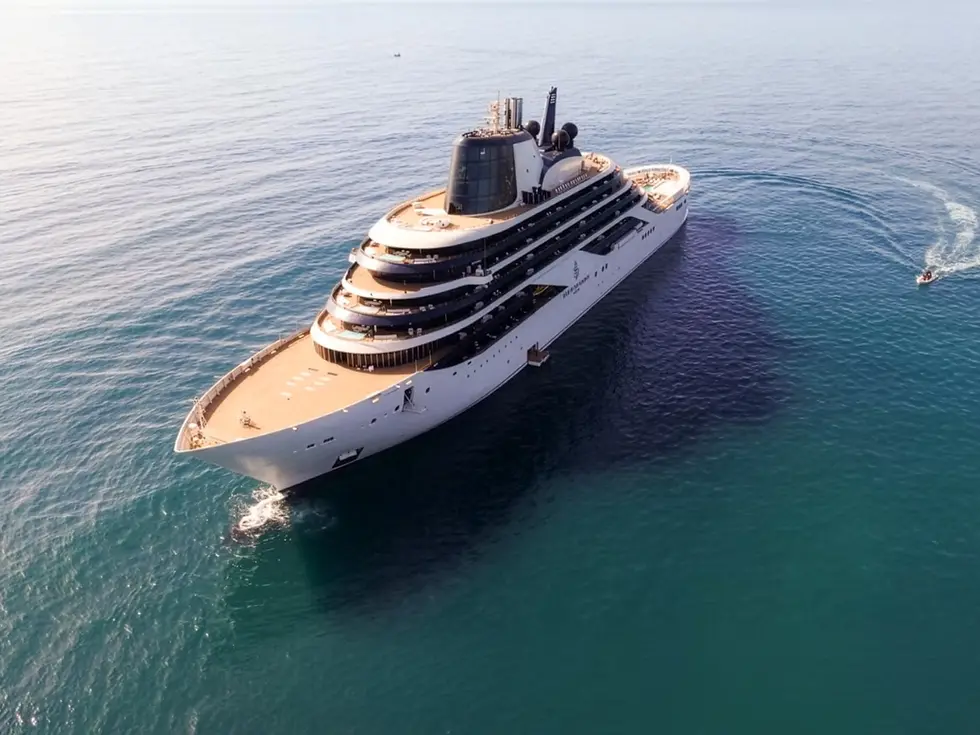
Four Seasons Yachts launched its inaugural vessel, Four Seasons I, in March 2026, sailing the Mediterranean through the Greek Islands, French Riviera, and Croatia, hosting just 222 guests across 95 suites with a strategy built around quieter ports and private anchorages inaccessible to larger ships.
Aman has gone even further in the opposite direction: smaller, more expensive, more austere. Amangati carries just 94 guests across 47 suites — the smallest vessel among its luxury peers and the most expensive by a substantial margin, with an entry-level suite more than double the size of Ritz-Carlton's comparable cabin and a top suite spanning nearly 3,800 square feet with its own private lift and in-suite massage room. Industry analysis describes it plainly: Amangati is "the purest expression of a hotel brand translated to water."
Orient Express and Ritz-Carlton are running the same playbook, and the framing from The Hollywood Reporter's 2026 travel coverage captures exactly why: these hospitality heavyweights are "taking their brand of high-end service to the high seas, betting that affluent travellers would rather board a boutique yacht than a floating megacity." This isn't a cruise industry story. It's a hotel brand story that happens to take place on water.

Why now — the actual business logic
Hospitality trade analysis is direct about the motive: as the luxury hotel market gets more saturated and competitive, brands need new ways to hold guest attention and be perceived as category leaders. Entering a genuinely new vertical — sea, air, wellness, residences — builds what the industry calls a "brand halo": visible proof a brand is setting the pace rather than following it.
There's a cleaner financial logic underneath the halo effect, too. These ventures create new revenue streams without requiring the brand to acquire new real estate — a genuinely efficient way to grow a portfolio in a market where trophy real estate is scarce and expensive. A yacht is, in effect, a hotel that can be built once and sold in dozens of different geographies over its lifetime, without a single new land acquisition.
This sits inside a much broader ecosystem strategy across the luxury tier. Aman is deepening its residential offerings, recognising that its most devoted guests want to live the Aman philosophy permanently, not just visit it, while Rosewood's Asaya wellness concept blurs the line between spa and hotel entirely, adapting to each property's cultural context rather than exporting one fixed wellness template. Yachting is simply the newest, highest-profile expression of a strategy these brands were already running on land.

Where most of them get it wrong
The upside case is compelling. The risk case is just as real, and it's structural, not incidental.
1. The operating model doesn't transfer cleanly from land. A hotel brand can replicate its experience across cities through standardised architecture, trained staff, and predictable guest flow. Maritime luxury specialists are blunt about why that doesn't work at sea: every seabound experience is exposed to variables outside anyone's control — weather, ports, crew dynamics, regulatory frameworks, and cultural context — meaning scaling a yacht fleet multiplies uncertainty rather than replicating a known formula. The same report notes that a charter brand expanding from five to twenty-five vessels across regions can succeed operationally while still failing experientially, because guests encounter inconsistent service or different interpretations of "luxury" from crew to crew — a consistency problem that a hotel's fixed address never has to solve.
2. Execution risk sits directly on top of brand equity. Trade analysis is explicit that there's a real risk of brand dilution if the onboard service experience fails to match the brand promise — and at this price point, that gap is unforgiving. A five-star hotel that has a mediocre night can lean on years of accumulated trust. A single disappointing week on a $50,000-a-night yacht, for a smaller and more vocal guest base, can travel through word-of-mouth and press faster than the brand can repair it.
3. Regulatory and cost complexity is genuinely new territory. Staffing, training, and safety standards for maritime operations are far more complex than a traditional hotel, and brands entering this space are absorbing an entirely new cost structure and regulatory relationship they've never had to manage on land.
4. The environmental question isn't going away. Analysts note the obvious tension: the carbon footprint of a superyacht sits uncomfortably against the sustainability values many luxury consumers now expect from the brands they book — a reputational exposure that pure hotel stays don't carry in the same way.
5. Fit matters more than ambition. The broader brand-extension research backs this up category by category: product-category fit is the single strongest predictor of whether a luxury brand extension succeeds or backfires, and even well-fitting extensions can create negative reciprocity effects that damage the parent brand if poorly executed. The clearest pattern across brand-dilution research is simple: a mismatch between the extension and what the brand fundamentally stands for is what erodes trust — not the ambition of the extension itself.
What separates a smart yacht launch from a vanity one
Match the philosophy, not just the price point. Amangati works as a concept precisely because it translates Aman's specific brand language — serenity, minimalism, extreme privacy — onto water, rather than simply slapping the Aman name on a generic superyacht template. Four Seasons' approach, built around gastronomy, multiple dining venues, and a very high staff ratio, similarly extends what the brand is already known for on land. The yachts that will struggle are the ones chasing the category because competitors are in it, without a clear translation of what the hotel brand actually means once it's floating.
Start small and protected, not fast and wide. The maritime luxury research is consistent on this point: the real 2026 strategic challenge in this category isn't growth, it's controlled coherence — luxury at sea has to be designed and protected, not assumed to scale the way a hotel portfolio does. A single, obsessively-run flagship vessel builds more brand equity than a rushed fleet of five inconsistent ones.
Treat crew training as a brand investment, not an operating cost. Since consistency at sea is a human and operational problem rather than a design one, the brands that win here will be the ones treating crew culture and training with the same rigour as their most iconic hotel properties — not as a logistics afterthought bolted onto a marketing launch.
Be honest about who this is actually for. These vessels are a natural extension for a brand's most devoted, highest-spending guests — the ones already living the ecosystem on land through residences, clubs, and repeat stays. Marketing a yacht launch as a mass-luxury moment rather than a deepening of an existing relationship with the brand's most loyal guests risks overselling a product built for a genuinely narrow audience.
Ready to make your brand stand out? Contact us at The Blended Agency.


Comments